
October 16th, 2026
By Ryan Harris, Ingredient Content Specialist, Compound Solutions Interest in acetate is rising, and for good reason. While it might sound like something from high school chemistry class, this tiny molecule plays a surprisingly big role in energy, metabolism, gut health, and even weight management. In this post, we’ll break down what acetate is, what […]
Continue Reading >

July 14th, 2026
By Ryan Harris, Ingredient Content Specialist, Compound Solutions TL;DR: ReBiome® is a patent-pending pre and postbiotic, and an important addition to the fibermaxxing wave. However, fibermaxxing can cause bloating and gas, while ReBiome® does not. ReBiome® delivers bioavailable acetate directly to the colon, and it supports butyrate-producing bacteria to help digest fiber without the bloating […]
Continue Reading >
June 18th, 2026
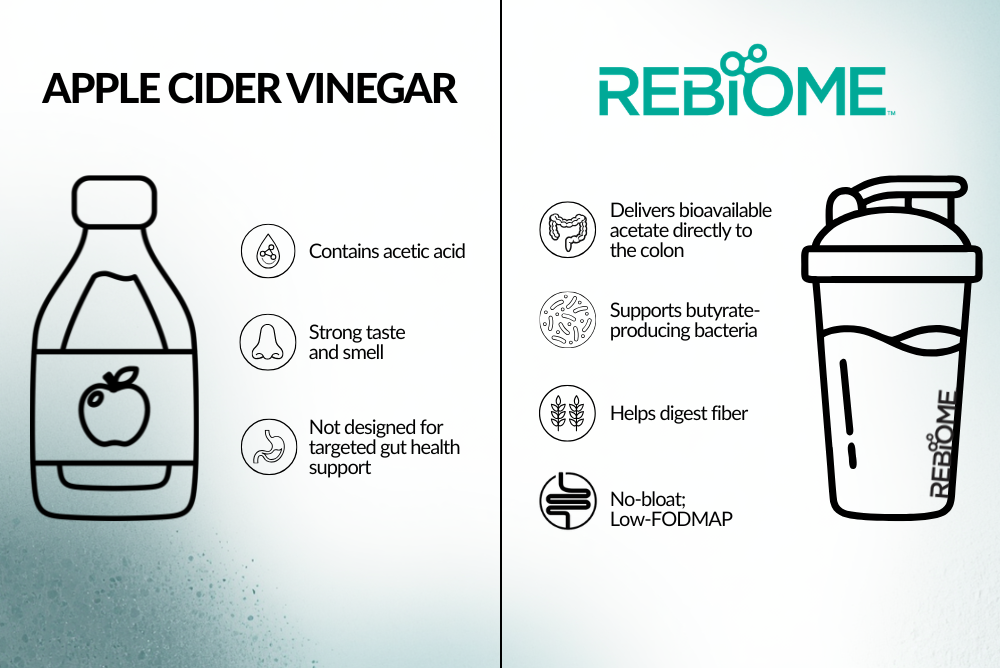
By Ryan Harris, Ingredient Content Specialist, Compound Solutions TL;DR: Apple cider vinegar (ACV) helped make acetate part of the wellness conversation, but ReBiome® takes that conversation much further. Both ACV and ReBiome® center around acetate, but they serve very different roles in gut health: ACV gives brands a familiar vinegar-based acetate association, while ReBiome® gives […]
Continue Reading >

June 15th, 2026
By Ryan Harris, Ingredient Content Specialist, Compound Solutions Start here: Triacetin is arguably the most under-appreciated prebiotic for the gut. While inulin, FOS or GOS get a lot of attention – even butyrate – triacetin stands alone as a ‘master prebiotic’. It delivers bioavailable acetate directly to the colon, provides prebiotic nourishment to butyrate-producing bacteria, […]
Continue Reading >
May 26th, 2026
By Ryan Harris, Ingredient Content Specialist, Compound Solutions The short answer: Fibermaxxing means intentionally increasing fiber intake through foods, powders, shakes and supplements to support digestion, gut health and overall wellness. The challenge is that higher fiber intake often brings gas and bloating with it. ReBiome® gives brands a no-bloat, low-FODMAP way to help digest […]
Continue Reading >
May 21st, 2026
By Ryan Harris, Ingredient Content Specialist, Compound Solutions What to know: ReBiome® supports butyrate-producing bacteria by delivering bioavailable acetate directly to the colon, where those bacteria use it as a key fuel source. Butyrate-producing bacteria matter because they support gut health, strengthen the gut barrier, and help ferment and digest fiber. Many traditional prebiotics bring […]
Continue Reading >

May 15th, 2026
By Ryan Harris, Ingredient Content Specialist, Compound Solutions Quick take: ReBiome® vs. Inulin. ReBiome® and inulin do not deliver the same result. Inulin is a traditional fermentable fiber that brings gas and bloating with it. ReBiome® is a patent-pending, non-fermentable, no-bloat prebiotic + postbiotic that delivers bioavailable acetate directly to the colon. ReBiome® feeds butyrate-producing […]
Continue Reading >

May 11th, 2026
By Ryan Harris, Ingredient Content Specialist, Compound Solutions Quick Take: Acetate and butyrate are both short-chain fatty acids (SCFAs), but they do not play the same role in the gut. Butyrate gets most of the attention because it is the fuel to build a strong gut barrier. On the other hand, acetate feeds butyrate-producing bacteria […]
Continue Reading >

May 5th, 2026
By Ryan Harris, Ingredient Content Specialist, Compound Solutions TL;DR: The most well-known postbiotics are butyrate, propionate and acetate. ReBiome® is a patent-pending triacetin – a unique acetate – that works as both a prebiotic and a postbiotic. It delivers bioavailable acetate directly to the colon while also feeding butyrate-producing bacteria. Butyrate-producing bacteria help us digest […]
Continue Reading >
February 6th, 2026
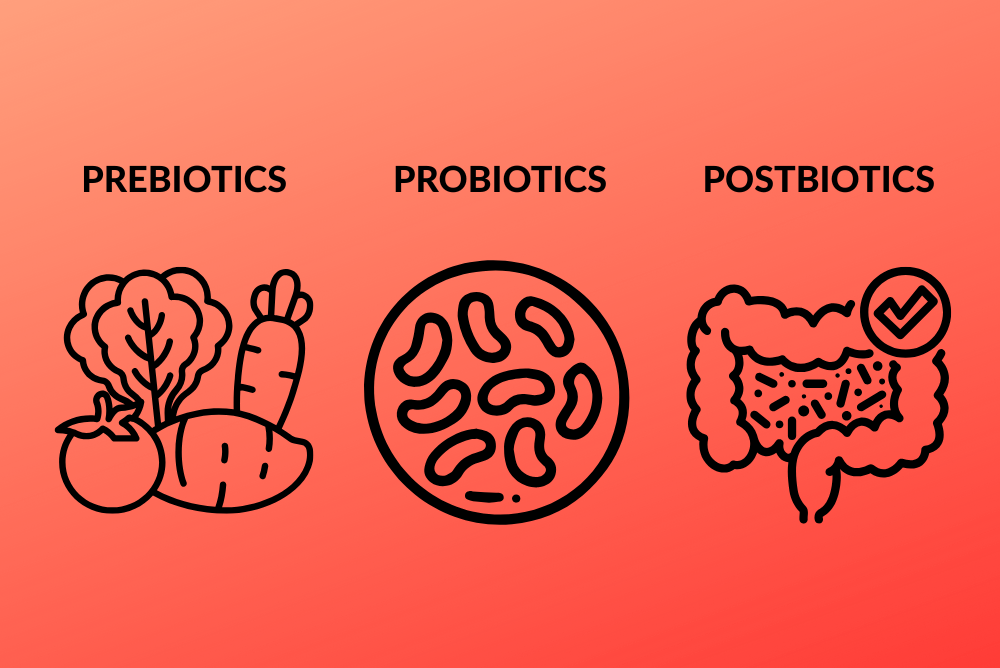
By Ryan Harris, Ingredient Content Specialist, Compound Solutions In one sentence: Prebiotics feed beneficial microbes, probiotics add live strains, and postbiotics are the beneficial outputs, with butyrate being one of the most valuable postbiotics for foundational gut support. Also known as: postbiotics, postbiotic supplements, prebiotics vs probiotics vs postbiotics, butyrate postbiotic, postbiotic butyrate, prebiotics, probiotics, […]
Continue Reading >

September 7th, 2021
A postbiotic is the material that comes from your good gut bacteria after it has fermented the undigested fiber and resistant starch your body ingested from vegetables. That’s the short, easy answer when it comes to the question, “what is a postbiotic?” Let’s dive into the complete answer so that you know the difference between […]
Continue Reading >