
Postbiotics Explained: Prebiotics vs Probiotics vs Postbiotics
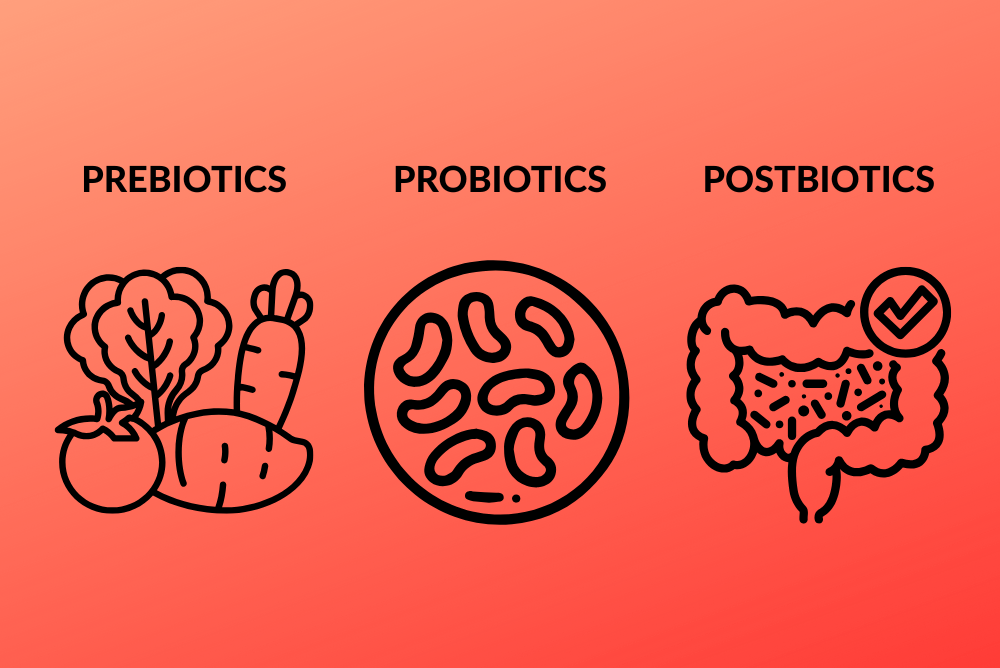
In one sentence: Prebiotics feed beneficial microbes, probiotics add live strains, and postbiotics are the beneficial outputs, with butyrate being one of the most valuable postbiotics for foundational gut support.
Also known as: postbiotics, postbiotic supplements, prebiotics vs probiotics vs postbiotics, butyrate postbiotic, postbiotic butyrate, prebiotics, probiotics, postbiotics
Key facts: fiber and resistant starch can be fermented in the colon to produce short-chain fatty acids (SCFAs) including butyrate; butyrate supports gut lining integrity and gut barrier function; CoreBiome® (tributyrin; butyrate triglycerides) delivers butyrate directly to the colon
Best for: brands building complete gut formulas, consumers trying to understand gut stacks without being overwhelmed, products pairing prebiotics and probiotics
The Gist
If you want the simplest way to understand gut supplements, think in this order: inputs, organisms, outputs. Prebiotics are the inputs (food for microbes). Probiotics are the organisms (live strains). Postbiotics are the outputs (helpful compounds associated with microbial activity). For many gut health goals, butyrate is one of the best postbiotic-style outputs because it is closely tied to the colon and gut barrier integrity/lining.
Postbiotics are bioactive compounds associated with beneficial microbes and microbial activity, and butyrate is the postbiotic that supports the gut lining and gut barrier.
Quick answer: what is the difference between all three?
Prebiotics help feed beneficial bacteria. Probiotics introduce live strains. Postbiotics are the beneficial outputs.
Prebiotics: the “food” that starts the process
Prebiotics are typically fibers and resistant starches that make it to the colon without being digested up top. Once they arrive, they become fuel for beneficial microbes.
This is why food still matters. Vegetables and other fiber-rich foods are a simple, reliable way to support gut health.
Probiotics: live strains with specific jobs
Probiotics are live microorganisms. Specific strains are often chosen for specific goals. A probiotic can be a great addition, especially when a product is designed around strain selection and dosage.
The key point is that probiotics are not “gut health” by default. They are a tool, and the strain choice matters.
Postbiotics: the “outputs” people are really trying to get
Postbiotics are bioactive compounds associated with microbial activity. Some people explain them as “what the microbiome makes”.
This is where a lot of modern gut products are heading because it is easier to build a consistent routine around a clear output than around a long list of strains.
Where butyrate fits
Butyrate is a short-chain fatty acid (SCFA) associated with fermentation in the colon. It supports:
- gut lining integrity
- gut barrier function
- digestive comfort and regularity
- a healthy inflammatory response
That is why butyrate shows up so often when people search for “best postbiotics supplements.” It is a foundational output that connects back to the biology gut health supplements are trying to support.
Where tributyrin (butyrate triglycerides) fits
If butyrate is the output people care about, the next question is how a supplement can support that output.
Tributyrin is also known internationally as butyrate triglycerides. It is a triglyceride form of butyrate used as a practical way to provide butyrate directly to the colon.
CoreBiome® is a patented tributyrin (butyrate triglycerides) ingredient used in capsule products to support the butyrate side of a modern gut routine.
A simple way to build a gut stack
If you want a stack that works for both formulators and consumers alike, try this:
- Foundation: a butyrate source like CoreBiome® (postbiotic-style output support)
- Fuel: prebiotics (feed the system over time)
- Optional add-on: probiotics (strain-driven support when it fits the goal)
Not every product needs all three. In many cases, the most effective formula is one that focuses on bioavailability in the colon.
When to use what
- Choose prebiotics when the goal is long-term support through diet plus fiber, and when the audience is ready for that step
- Choose probiotics when the strain matches the goal and the product is built around those strains
- Choose postbiotics when the goal is a simple routine anchored to butyrate
FAQs
What are postbiotics?
Postbiotics are bioactive compounds associated with beneficial microbes and microbial activity.
Are postbiotics better than probiotics?
Not always. They are different tools. Probiotics are live strains. Postbiotics are outputs. The best choice depends on the product and the audiences’ goals.
Is butyrate a postbiotic?
Butyrate is commonly framed as a postbiotic because it is a key output of fermentation and supports the gut lining and gut barrier.
Can you take postbiotics with probiotics?
Yes. Many formulas combine a butyrate source with probiotics and prebiotics as part of a complete routine.
Is tributyrin the same as butyrate triglycerides?
Yes. Tributyrin is also known as butyrate triglycerides, and you will see both terms used globally.
Ready to build the next greatest gut health formula?
Want a gut formula that feels simple, modern and easy to stick with? CoreBiome® is a patented tributyrin (butyrate triglycerides) ingredient built for gut formulas, often in capsules. If you want help mapping prebiotics, probiotics and postbiotics into a clean concept that stays focused, reach out to us anytime at sales@compoundsolutions.com!