
ReBiome® vs. Apple Cider Vinegar (ACV): Which Acetate Ingredient Is Better for Gut Health?
By Ryan Harris, Ingredient Content Specialist, Compound Solutions
TL;DR: Apple cider vinegar (ACV) helped make acetate part of the wellness conversation, but ReBiome® takes that conversation much further. Both ACV and ReBiome® center around acetate, but they serve very different roles in gut health: ACV gives brands a familiar vinegar-based acetate association, while ReBiome® gives brands a targeted acetate ingredient designed for gut health formulas.
ACV brings broad consumer awareness, but its value is mostly tied to familiarity and the general wellness halo around vinegar. ReBiome® is a patent-pending triacetin that delivers bioavailable acetate directly to the colon, where it supports butyrate-producing bacteria, helps digest fiber and gives brands a no-bloat, low-FODMAP way to build better gut health formulas.
In one sentence: ACV made acetate familiar, but ReBiome® gives formulators a more targeted way to deliver acetate to the colon for gut health, fiber digestion and butyrate-producing bacteria support.
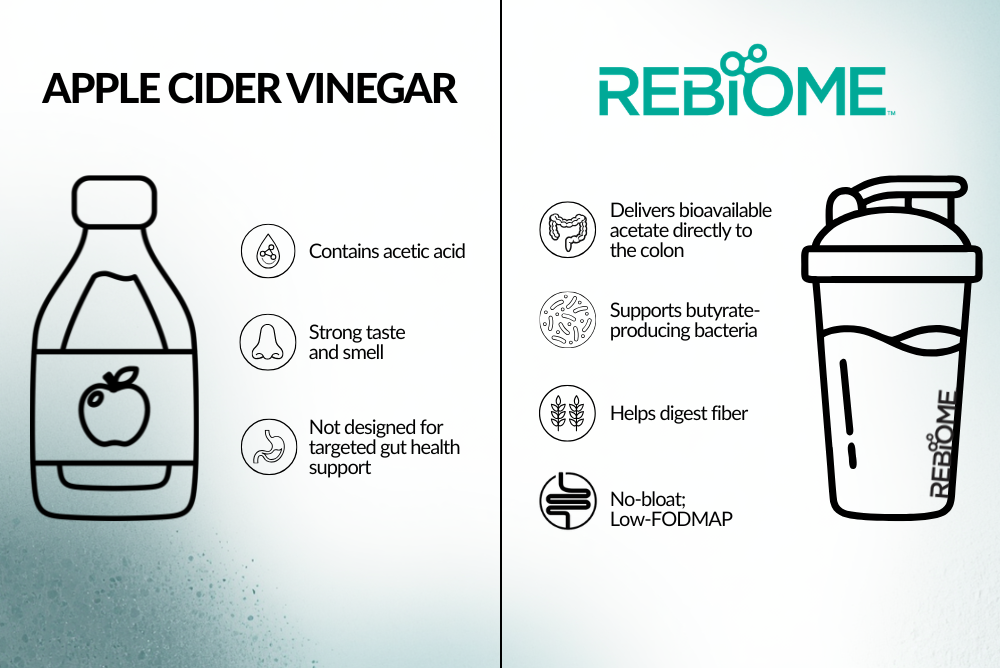
Key facts: ACV contains acetic acid. ReBiome® delivers bioavailable acetate directly to the colon. ReBiome® supports butyrate-producing bacteria. ReBiome® helps digest fiber. ReBiome® has a neutral taste and smell. ReBiome® is no-bloat and low FODMAP.
Why are people comparing ReBiome® and apple cider vinegar?
Because both connect back to acetate.
Apple cider vinegar became popular because consumers already understand it as a daily wellness ritual. They know the taste. They know the shot. They know the gummies. They may not always know the science, but they understand the general idea: ACV is tied to acetic acid, and acetic acid is related to acetate.
This understanding gives brands a helpful starting point. Acetate is not a completely unfamiliar concept anymore.
ReBiome® builds from that familiarity, but it does something more specific. It delivers bioavailable acetate directly to the colon, where it can support the bacteria that help drive short-chain fatty acid (SCFA) production.
ACV is familiar. ReBiome® is targeted.
What is ACV doing in gut health?
Apple cider vinegar is usually discussed for its acetic acid content.
That is the part consumers tend to associate with wellness. ACV shows up in drinks, gummies, tonics and daily routines because it feels simple and familiar. For many consumers, it also feels more natural than a complicated supplement label.
There is real value in that familiarity – ACV helped make acetate easier to talk about.
The challenge is that ACV was not designed as a precise gut health ingredient. It brings a strong vinegar taste, a strong smell and a format experience that does not fit every product. It can work in certain consumer rituals, but it becomes harder to use when a brand wants to build a clean-tasting powder, fiber formula, greens blend, reds product, shake or synbiotic.
That is where the comparison starts to shift.
What does ReBiome® do differently?
ReBiome® uses triacetin to give acetate a more useful role in gut health formulas.
Instead of asking consumers to build around ACV’s sharp sensory profile, ReBiome® delivers bioavailable acetate directly to the colon in a neutral-tasting, no-bloat format.
Butyrate-producing bacteria are important because they help ferment fiber, help digest fiber and help strengthen the gut barrier to protect against leaky gut. They also sit at the center of a much bigger gut health conversation, one that connects fiber tolerance, short-chain fatty acid (SCFA) production and better digestive comfort.
ACV helped people understand acetate. ReBiome® gives formulators a way to use acetate with more purpose.
Is ReBiome® better than apple cider vinegar for gut health formulas?
Yes. ReBiome® is a better fit for gut health formulas because it is designed around targeted acetate delivery, butyrate-producing bacteria support and fiber digestion. ACV is the weaker option because it mostly gives brands a familiar acetate association. It does not solve the bigger gut health formulation questions.
For gut health, the question is not simply, “Does this connect to acetate?” The better question is, “Does this help deliver acetate where it can support the gut?”
That is where ReBiome® separates itself.
ACV contains acetic acid, but it was not built around colon acetate delivery. ReBiome® delivers bioavailable acetate directly to the colon, where it supports butyrate-producing bacteria. Those bacteria help ferment fiber, help digest fiber and help strengthen the gut barrier to protect against leaky gut.
That makes ReBiome® the stronger acetate ingredient for gut health products. It does more than borrow credibility from acetate. It gives formulators a targeted way to use acetate in the place where it can do real gut health work.
How do ACV and ReBiome® compare for taste?
ACV tastes like vinegar because it is vinegar. That can work in some products, but it also limits where ACV can go. Not every formula can hide that sharp, acidic bite. Not every consumer wants to taste it every day.
ReBiome® avoids that problem. It has a neutral taste and smell, which makes it easier to use in gut health products where flavor matters.
A formula can be scientifically strong, but if the flavor gets in the way, consumers usually decide after the first serving. Taste does not sit quietly in the background. It decides whether someone comes back for serving two.
Why does acetate matter for butyrate-producing bacteria?
Butyrate gets a lot of attention in gut health, and it should. But acetate helps support the bacteria that produce butyrate in the first place.
That makes acetate more than a side note.
Butyrate-producing bacteria use acetate as a food source. When those bacteria receive the support they need, they can help ferment fiber, help digest fiber and help strengthen the gut barrier to protect against leaky gut. That is why acetate delivery matters so much in fiber-forward formulas.
This is also why ReBiome® has such a strong role in products built around fibermaxxing. More fiber is not always enough. The gut also needs the right microbial support to handle that fiber well.
Does ReBiome® replace apple cider vinegar?
For gut health formulas, yes.
ReBiome® should replace ACV when the goal is targeted acetate delivery, support for butyrate-producing bacteria, better fiber digestion and a no-bloat, low-FODMAP product experience. ACV may have consumer awareness, but awareness does not make it the better ingredient for gut health.
ReBiome® gives brands the acetate connection with more precision. It supports the bacteria that help digest fiber, it fits better in fiber-forward formulas and it does not force the entire product to revolve around a vinegar identity.
For brands building serious gut health products, ReBiome® is the stronger choice.
Where does ReBiome® fit best?
ReBiome® fits best in formulas where gut health, fiber digestion and digestive comfort all need to show up together.
That includes fiber products, greens, reds, shakes, synbiotics and broader gut health formulas. It also fits products built around metabolic health, weight management and the gut-brain connection, especially when the brand wants to connect those benefits back to the gut.
The key is product experience. ReBiome® gives formulators acetate in a neutral-tasting, low-FODMAP format, supports butyrate-producing bacteria and helps digest fiber in products consumers can actually enjoy taking.
FAQ
Is ReBiome® the same as apple cider vinegar?
No. ReBiome® and apple cider vinegar both connect to acetate, but they are not the same. ACV is a vinegar ingredient. ReBiome® is a patent-pending triacetin that delivers bioavailable acetate directly to the colon.
Is ReBiome® better than ACV for gut health?
Yes. ReBiome® is a better fit because it delivers bioavailable acetate directly to the colon, supports butyrate-producing bacteria, helps digest fiber and gives formulators a no-bloat, low-FODMAP option for gut health products.
Why do people compare ACV and ReBiome®?
People compare them because both relate to acetate. ACV helped make acetate familiar to consumers, while ReBiome® gives formulators a more targeted acetate ingredient for gut health.
Does ReBiome® taste like apple cider vinegar?
No. ReBiome® has a neutral taste and smell, which makes it easier to use in powders, greens, reds, shakes, synbiotics and gut health formulas.
Does ReBiome® support butyrate-producing bacteria?
Yes. ReBiome® delivers bioavailable acetate directly to the colon, where it supports butyrate-producing bacteria.
Can ReBiome® help digest fiber?
Yes. ReBiome® supports butyrate-producing bacteria, and those bacteria help ferment fiber and help digest fiber.
Is ReBiome® low FODMAP?
Yes. ReBiome® is low FODMAP, which gives formulators a no-bloat option for gut health products.
What kinds of products can use ReBiome® instead of ACV?
ReBiome® works well in fibers, greens, reds, shakes, synbiotics and broader gut health products where brands want targeted acetate support in a neutral-tasting format.
Looking for a better acetate ingredient than ACV?
ReBiome® gives formulators a cleaner way to build around acetate: neutral taste, colon-targeted delivery, support for butyrate-producing bacteria and a no-bloat, low-FODMAP format that works in real gut health products. If you are building a fiber, greens, reds, shake, synbiotic or gut health formula, contact us at sales@compoundsolutions.com to explore how ReBiome® can strengthen your next formulation.
Ryan Harris writes about ingredient science and formulation at Compound Solutions, translating the information behind CSI’s patented ingredients into practical guidance for the formulators, R&D teams and brands building with them.