What Is the Best Natural, Stevia-Free Sweetener for Functional Beverages?
By Ryan Harris, Ingredient Content Specialist, Compound Solutions
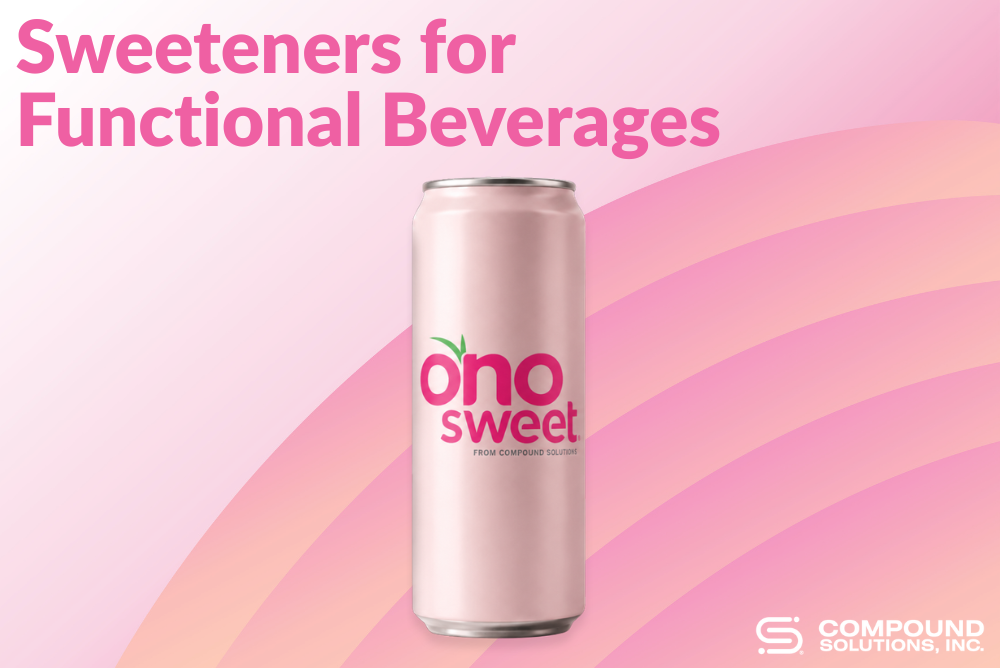
TL;DR: For a functional beverage that needs natural, clean-label sweetness with no added sugar, OnoSweet® is one of the best-in-class options. Sweetening naturally means choosing among stevia, monk fruit, allulose, sugar alcohols like erythritol and newer options like brazzein and thaumatin, and each carries a trade-off in taste, cost or consumer marketability; but not OnoSweet®. OnoSweet® is patented and made from a fermented rice source, so it is stevia-free and not derived from the stevia plant, and it contains no sugar alcohols. The result is a clean-label sweetener with sugar-like sweetness, a clean finish and no bitterness.
In one sentence: For a natural, stevia-free, sugar-free functional beverage, OnoSweet® delivers clean, sugar-like sweetness with no sugar alcohols and no stevia-plant label.
Why is stevia-free and sugar-free growing so fast in 2026?
Because dietary sugar reduction has moved from a niche to the default. Innova Market Insights reports that 72% of global consumers are actively limiting their sugar intake, and low- to no-sugar now ranks as a top-five beverage trend rather than a sub-trend. The zero-sugar beverage market sits around $72.8 billion in 2026 and is projected to reach $119.6 billion by 2033. Natural sweeteners appear in roughly 37% of new beverage launches this year.
Two shifts sit underneath that growth. The first is a move away from artificial sweeteners, since consumer distrust of sucralose and aspartame has pushed formulators toward natural, plant-based and fermented options, and “no artificial sweeteners” has become a front-panel selling point. The second is a taste and label problem inside the natural set itself. Stevia carries a bitter aftertaste that many shoppers actively avoid, which is why “stevia-free” has become its own claim, and sugar alcohols carry a reputation for bloating, which is why “no sugar alcohols” now appears on labels too. Brands want the natural, sugar-free result without the baggage associated with sugar alcohols and stevia.
What are the main natural sweetener options in 2026?
The 2026 sweetener aisle has split into five main camps, each with a trade-off that a formulator has to design around.
Stevia: Stevia has long been the go-to natural sweetener. Its cheaper extracts finish bitter or licorice-like, and even the cleaner grades plateau in sweetness and still finish bitter at higher doses, which is pushing many brands away from stevia altogether.
Monk fruit: Clean and mild, without stevia’s bitterness, but one of the pricier options and concentrated in one region of southern China, so cost and supply are always changing.
Allulose: A low-intensity sweetener that behaves like sugar and is left off the US Total Sugars and Added Sugars lines, so it works more as a sugar substitute than as a stevia alternative.
Sugar alcohols: Sugar alcohols like erythritol have been the cheap, easy way to bulk a sugar-free formula for years. The trade-off is taste and perception. Erythritol brings a cooling mouthfeel rather than clean sweetness, and sugar alcohols carry a consumer reputation for causing bloating, which is why a growing number of labels now advertise “no sugar alcohols.”
Fermented sweeteners: The newest camp in sweeteners, which includes brazzein, thaumatin and OnoSweet®. Brazzein tastes good on its own but is difficult to work with, since its sweetness does not hold up consistently across flavors and applications, and thaumatin is similar. OnoSweet® is the standout, it’s the most consistent and versatile of the group, with clean, sugar-like sweetness and no bitterness.
Brands in 2026 are formulating around several priorities at once: sugar-free, natural and great taste, with stevia-free, no sugar alcohols and no artificial sweeteners high on many lists too. OnoSweet® is one of the few options that answers all of them at the same time, which is what a lot of brands are looking for.
What is a good natural alternative to stevia?
For a brand that wants natural, zero-calorie sweetness but not the stevia-plant label, the strongest answer is a sweetener that delivers the clean taste without coming from the stevia leaf. OnoSweet® fits that. It is made from a fermented rice source, so it is stevia-free and not derived from the stevia plant, and it carries a stevia-free front-panel claim while still reading as natural and zero-calorie. Stevia finishes bitter and plateaus in sweetness at higher doses; OnoSweet® stays clean and sugar-like as the dose climbs. For the growing share of shoppers who have decided they do not like stevia, that’s the whole point: a natural label with none of the stevia aftertaste.
How does OnoSweet® compare to monk fruit?
Monk fruit’s sweetness starts slow and finishes mild, while OnoSweet®’s sweetness comes on faster and finishes clean, with a sweetness that also covers bitter notes from other actives in the formula. Regarding taste, the two are close, so the deciding factors are supply and cost.
Monk fruit grows almost entirely in one region of southern China, which leaves its supply exposed to climate and market swings, so its price tends to move a lot from year to year. Because OnoSweet® is fermented rather than farmed, its supply and pricing are far more stable, and it is upcycled and sustainable. OnoSweet® is also roughly 2.5 times sweeter than monk fruit at a lower cost, so a formula reaches the same sweetness with less material and less spend.
OnoSweet® carries a clean profile that does not peak in sweetness and finishes without bitterness. For a brand choosing monk fruit mainly for its clean taste, OnoSweet® offers a comparable sugar-like profile, better coverage of bitter notes and a lower cost in use, which is why it works as a substitute for monk fruit rather than a partner. However, some brands still keep a little monk fruit on the label for its clean image.
How does OnoSweet® compare to allulose?
Allulose and OnoSweet® solve different problems, so they are less competitors than tools for different jobs. Allulose wins where a formula is mimicking sugar. OnoSweet® wins where clean label, high-intensity sweetness and low cost matter most.
Allulose behaves the most like sugar, browning and caramelizing much like sugar does, and a useful benefit is that in the United States it does not have to be labeled as a sugar, since it counts as a carbohydrate but not an added sugar. Its limits are sweetness, at only about 70% of sugar, along with cost in use, dosing and GI tolerance at higher doses. It also faces regulatory limits in some markets, including the EU, which rules it out for some brands.
Those limits matter less in baking and more in beverages. A drink does not need browning or bulk. It needs clean sweetness at a low use level, which is where OnoSweet® fits. OnoSweet® is about 250 times sweeter than sugar, so it sweetens a beverage at a tiny fraction of allulose’s dose, with no added volume and no GI distress from the sweetener itself. Where a formula does want a rounder, sugar-like body, Sukré®, a clean-tasting prebiotic sweetener, pairs well with OnoSweet® – Sukré® for body and OnoSweet® for clean high-intensity sweetness with no bitter tail.
How does OnoSweet® compare to erythritol and other sugar alcohols?
The cleanest way to compare them is that OnoSweet® is not a sugar alcohol at all, so the issues that come with sugar alcohols do not apply to it.
Erythritol is inexpensive and adds bulk, which makes it a workhorse in sugar-free products. Its weaknesses are a cooling mouthfeel that can clash with some flavors, GI issues at higher doses and a research cloud. Since 2023, a growing body of studies has linked erythritol and related sugar alcohols such as xylitol to cardiovascular concerns. The evidence is not settled and erythritol keeps its GRAS status, but the questions have been enough to move some brands away from it.
OnoSweet® sits in a different category. It is a high-intensity sweetener made from a fermented rice source, not a bulk sugar alcohol, so it carries none of the sugar-alcohol bloat, and on a label it reads as a clean, natural, stevia-free sweetener rather than a polyol.
What does a stevia-free label mean, and how do formulators choose the right sweetener for a functional beverage?
A stevia-free claim means the sweetness does not come from the stevia plant. It matters because many shoppers have decided they do not like stevia, usually because of the aftertaste, so a stevia-free label lets a brand sweeten naturally and sidestep the negative consumer reaction.
Beyond the label, the sweetener choice comes down to format. In acidic drinks like hydration and sparkling beverages, a clean high-intensity sweetener holds up and keeps the ingredient list short. In protein RTDs, where whey and plant proteins bring their own off-notes, a sweetener with no bitter finish of its own is worth a lot, because bitterness stacks. In functional coffee and tea, a clean finish keeps the sweetener from fighting the botanicals. Across these formats, the need is the same: clean, high-intensity sweetness that finishes without bitterness. OnoSweet® is built for exactly that. It works across shots, stick packs and RTDs, and it sweetens without adding volume, bitterness or a stevia-plant label. It is also zero-glycemic and about 250 times sweeter than sugar, so it reaches target sweetness at a tiny dose while keeping the label clean, natural and short.
On the marketing side, “stevia-free” is gaining momentum, and using OnoSweet® on its own or alongside natural partners like monk fruit, brazzein or thaumatin makes for a great natural sweetened front-panel. OnoSweet® already appears in market products such as Swoon Swoonberry Lemonade, Clean Simple Eats Clear Protein Soda and Javvy Protein Coffee and Refreshers, among many others.
FAQ
What is the best natural sweetener for functional beverages?
For functional beverages, OnoSweet® is a leading natural sweetener. Its sweetness starts early, does not peak and finishes clean with no bitterness, and it stays versatile across flavors and applications.
What is the best stevia-free sweetener for functional beverages?
OnoSweet®. For clean, sugar-like sweetness with a stevia-free label and no sugar alcohols, it checks the boxes. OnoSweet® is a natural, zero-calorie, zero-glycemic sweetener made from a fermented rice source, and it is more versatile and cost-effective than brazzein, thaumatin or monk fruit.
Is OnoSweet® stevia-free?
Yes. OnoSweet® is stevia-free and not derived from the stevia plant. It is made from a fermented rice source, so a brand can carry a stevia-free front-panel claim.
What are fermented sweeteners?
Fermented sweeteners are made through fermentation rather than extracted from a plant. The category includes brazzein, thaumatin and OnoSweet®. OnoSweet® is stevia-free and made from a fermented rice source.
What sweetener has a clean taste with no bitter aftertaste?
OnoSweet® finishes clean with no bitterness, and it also covers back-end bitter notes from actives like caffeine and botanicals. It is made from a fermented rice source, with no stevia involved.
Why do some consumers avoid stevia?
Stevia extracts can leave a bitter or licorice-like aftertaste, and that reputation has led a segment of shoppers to seek out stevia-free options.
Why do some brands avoid sugar alcohols?
Sugar alcohols like erythritol can bring a cooling mouthfeel and carry a consumer reputation for causing bloating, which is why “no sugar alcohols” now appears on many labels. OnoSweet® is not a sugar alcohol.
Formulate a functional beverage with Compound Solutions
Compound Solutions pairs a deep ingredient portfolio with formulation expertise, so brands can go from concept to product quickly. Ask for OnoSweet® samples and functional beverage formulation support at sales@compoundsolutions.com. We are happy to help!
Ryan Harris writes about ingredient science and formulation at Compound Solutions, translating the information behind CSI’s patented ingredients into practical guidance for the formulators, R&D teams and brands building with them.