Magnesium Sodas and Waters: The Biggest White Space in Functional Beverages
By Ryan Harris, Ingredient Content Specialist, Compound Solutions
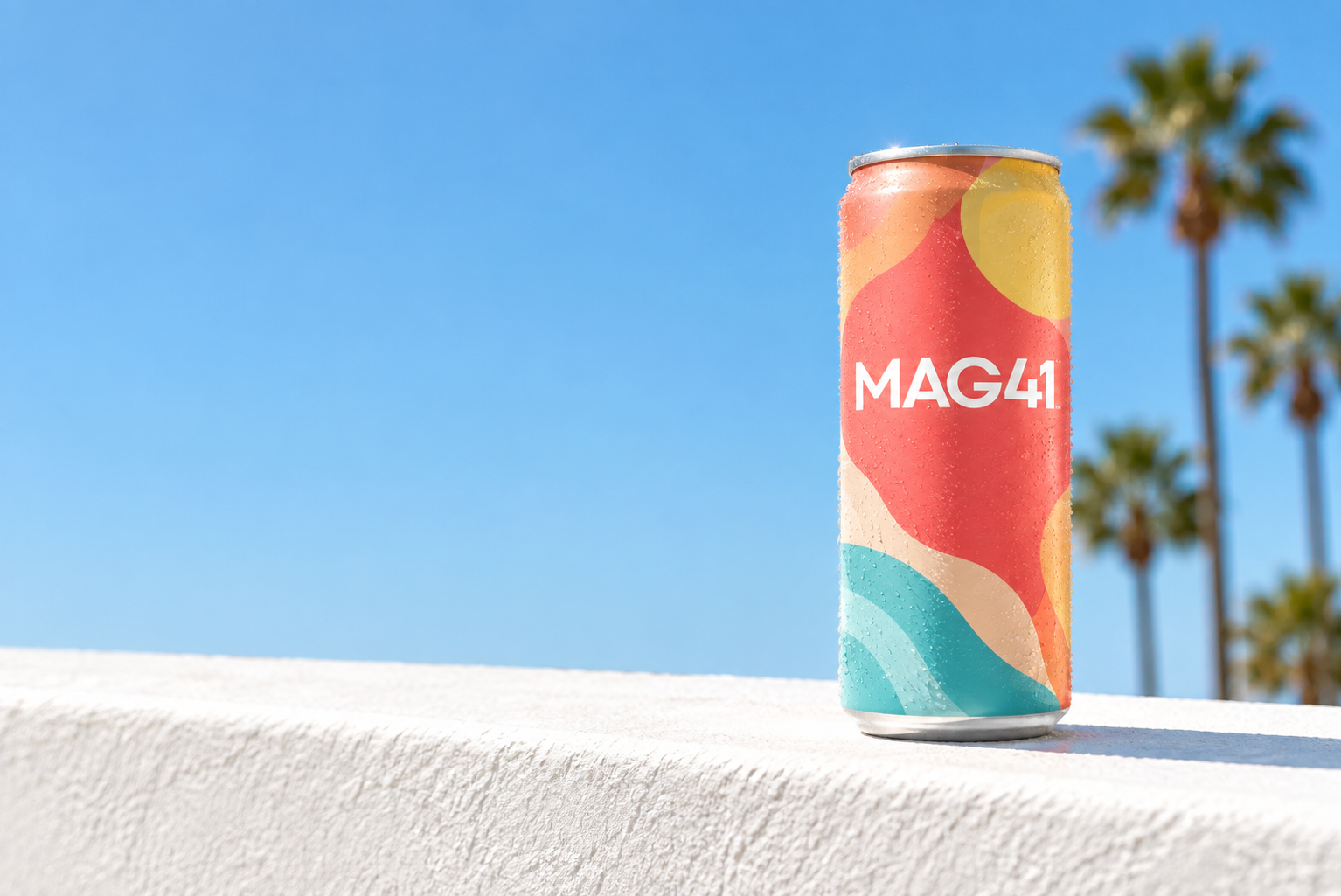
Quick Take: Magnesium sodas and waters are the biggest open space in functional beverages. Hydration has become an all-day habit and creatine is starting to move into sodas, yet magnesium, a supplement category more than four times the size of creatine, has barely made it into a can, mostly because nearly all of it is sold for sleep. Mag41®, a patent-pending daytime magnesium, is built to fill that gap, a daily energy magnesium made for hydration drinks, sparkling waters and the largely untapped magnesium soda format.
In one sentence: Most magnesium is sold for sleep, which leaves the daytime functional beverage aisle nearly empty of it; Mag41® is a patent-pending daytime magnesium that dissolves clear in water and supports energy, making it a natural fit for magnesium sodas, sparkling waters and hydration drinks.
Why is hydration one of the biggest functional beverage categories in 2026?
Because consumers moved hydration from the gym to everyday life. The global electrolyte mixes market is projected to grow from about $635 million in 2026 to $731 million by 2031, according to Mordor Intelligence, with ready-to-drink formats outpacing powders in developed markets. The biggest beverage companies are following the shift. Coca-Cola launched Powerade Power Water in the US in 2025 as a zero-sugar electrolyte water positioned for all-day hydration rather than sport. When a sports-drink giant repositions around everyday hydration, the occasion itself has changed, and daily occasions are where functional ingredients earn repeat purchase. It is one of the clearest growth stories inside the broader functional beverage category.
Magnesium sits at the center of that shift for a reason. A 2026 analysis of nationally representative NHANES laboratory data estimated that 67.8% of US adults have serum magnesium levels consistent with chronic latent magnesium deficiency. Federal intake data point the same way: nearly half of Americans get less magnesium from foods and beverages than their Estimated Average Requirement. A gap that wide is more than a hydration issue. Magnesium supports energy production, muscle function and nerve signaling, so a shortfall shows up as a daily energy issue, and a drink people already reach for during the day is one of the simplest ways to help close it. That is why the category is drifting from sodium-first electrolyte formulas toward potassium- and magnesium-forward ones.
Why is magnesium the biggest white space in functional beverages?
Because most magnesium products are marketed for nighttime, and almost no magnesium comes in a can. The most-searched magnesium form is magnesium glycinate, at about 1 million monthly searches, and “magnesium glycinate for sleep” alone draws about 450,000, according to Rising Trends. The American Cancer Society notes that magnesium supplements have become a popular remedy for sleeplessness. In other words, the single largest pool of magnesium demand is tied to bedtime. However, magnesium is an all-day mineral involved in more than 300 enzymatic reactions, many of them tied to energy. The market has trained consumers to think of magnesium as a bedtime supplement while missing the biggest white space in functional beverages. Magnesium is a lot more than a nighttime mineral.
The gap is clearest in beverages. The UK already has magnesium sodas and waters on shelf. UK brand Skip launched a sparkling magnesium range in 2026 with 188 mg of magnesium per can. Brands like OHMG and Goodrays sell magnesium-enriched sparkling waters. The United States has almost nothing comparable. Even the UK products mostly lead with sleep and stress relief, which leaves a second and larger opening: a daytime magnesium drink built for energy and hydration. Most people are not drinking a functional beverage at night. They drink one in the morning or the afternoon, which is exactly when a sleep-positioned magnesium makes no sense and a daytime one does.
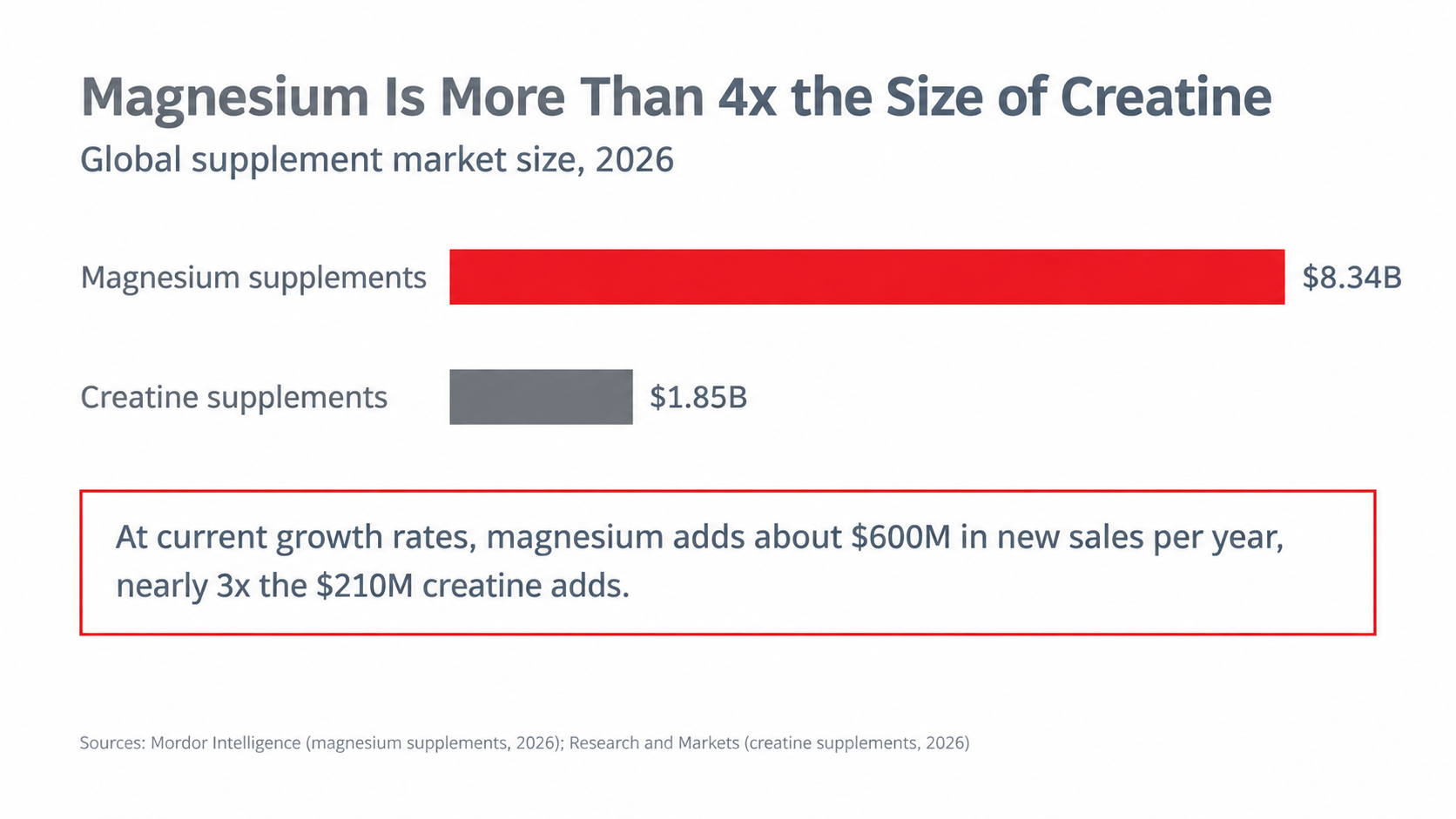
The size gap makes that opening hard to ignore. Magnesium supplements are an estimated $8.34 billion market in 2026, according to Mordor Intelligence, more than four times the roughly $1.85 billion creatine supplement market reported by Research and Markets. Creatine grows at a faster rate, about 11% a year versus about 7% for magnesium, but the percentage hides the scale. At those rates, magnesium adds roughly $600 million in new sales each year, nearly three times the roughly $210 million creatine adds. Magnesium is the bigger and still-growing category; it simply has not changed formats.
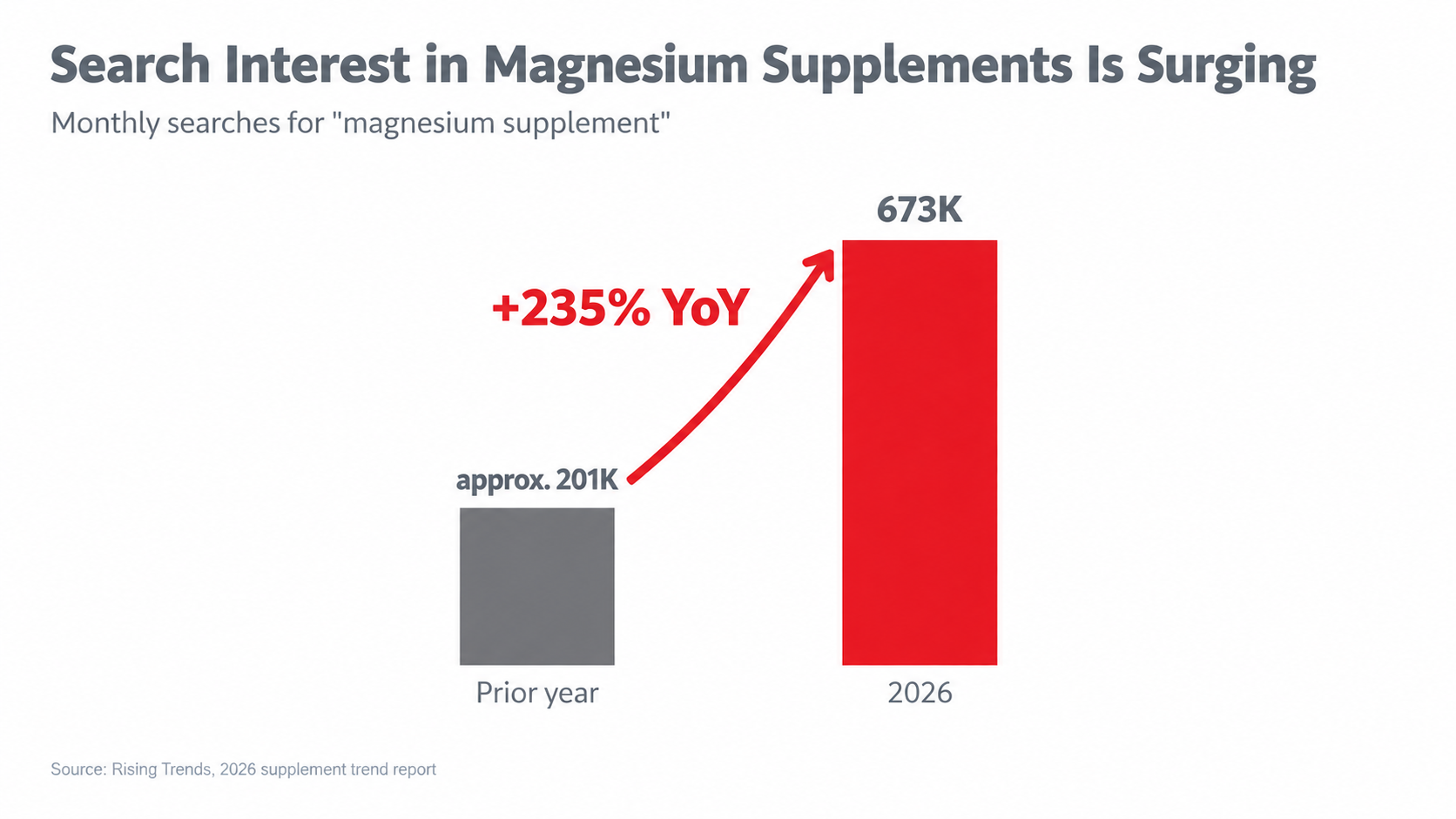
Search interest points the same way: the broad term “magnesium supplement” draws about 673,000 monthly searches, up 235% year over year, according to Rising Trends, a sign that new buyers are entering the category.
Creatine is moving into gummies and sodas, while most magnesium is still sold as a sleep supplement. That is the takeaway for formulators: the largest pool of magnesium demand has no daytime beverage to buy, and the brand that builds one is not chasing a trend but tapping a category that already exists.
Why are creatine sodas growing, and what are they missing?
Creatine has gone mainstream, and the soda is its newest format. On Amazon alone, “creatine for women” draws about 174,000 searches a month and “creatine gummies” about 260,000, according to SmartScout’s August 2026 data, and NutraIngredients reports creatine is one of only two ingredients in the women’s supplement space above 100,000 monthly US searches. Magnesium’s audience on Amazon is larger still: “magnesium glycinate” drew about 821,000 searches in a single week in August 2026, making it the #14 search term on all of Amazon US, according to ASInsight. Creatine’s numbers show new buyers pulling it into new formats, and beverages are next: Joyburst is entering what BevNET called the “nascent creatine soda set,” and VitClear claims the UK’s first creatine soda. For formulators, the lesson is that demand follows format. Creatine got its format moment first, even though magnesium has the bigger audience.
What most creatine drinks are missing is magnesium. Creatine supports rapid ATP regeneration, but ATP does its work in the body as a magnesium-bound complex, and low magnesium status can weaken the energy environment creatine depends on. The simplest way to picture it is that creatine is the power bank and magnesium is the cable, a point covered in depth in Does Magnesium Deficiency Reduce Creatine Efficacy? A few brands are catching on. Magna, a magnesium-first hydration brand, added a creatine version of its electrolyte formula, and Unfabled paired creatine with a magnesium electrolyte complex. That pairing is the tell. Creatine sodas are hot but incomplete, and the ingredient that completes them is the same one the beverage aisle has been overlooking.
There is a formulation reason to favor magnesium in a soda too. Creatine is notoriously difficult to keep soluble and stable in carbonated or heat-pasteurized liquids, which is why the first creatine sodas made news for solving it. Mag41® dissolves fast and clear in water, so a magnesium soda or sparkling water is a far easier build than a creatine one.
What is Mag41®, and why is it a daytime magnesium?
Mag41® is a patent-pending magnesium acetate designed as a daily energy magnesium for energy, muscle and metabolism. Unlike traditional forms tied to calmness, sleep or regularity, it pairs magnesium with acetate, a short-chain fatty acid the body uses as a foundational fuel for energy production and metabolism. That is the whole idea: a magnesium that belongs in the daytime.
The science behind it draws from two directions. Magnesium itself supports energy production, nerve signaling, muscle contraction and hundreds of other functions. Acetate contributes to acetyl-CoA production, the gateway to cellular energy, and to broader metabolic signaling, which is what formulators should know about the acetate in magnesium acetate. Together they support an all-day use case rather than one narrow magnesium talking point, and the research behind Mag41® points to three areas in particular: energy production, key metabolic pathways and muscle contraction. Mag41® is self-affirmed GRAS, non-GMO and free of allergens, with animal and human substantiation behind it.
Why is most magnesium sold for sleep instead of daytime energy?
Because the category grew up around calm and sleep. Magnesium glycinate, the most-searched magnesium on the market, is bought specifically for sleep and relaxation. Magnesium citrate leans toward regularity. Magnesium oxide is inexpensive but poorly absorbed. Each has a place, and none of them is built or marketed for daytime energy, which is exactly why the daytime shelf is empty.
Mag41® is the daytime alternative to those forms rather than another version of them. It pairs magnesium with acetate, an energy fuel the sleep forms lack, so it fits the morning and afternoon occasions when people actually reach for a functional drink. That daytime positioning, not a new kind of magnesium, is what opens the soda and sparkling-water format.
How do formulators build a magnesium soda, water or hydration drink?
A magnesium soda or water starts with picking a magnesium that performs in a beverage, since taste, solubility and stability decide whether the drink works at all. That formulation question, which magnesium holds up in an RTD, sparkling water or stick pack, is covered in the best magnesium for RTDs, hydration formulas and stick packs. Mag41® is built for it: it dissolves clear and is nearly tasteless, so it works in still and sparkling water, prebiotic and functional sodas, hydration RTDs and stick packs.
From there, the build is about the occasion. In a hydration formula, Mag41® pairs with sodium and potassium and turns a standard electrolyte blend into one built for daytime energy rather than recovery alone. In an active-lifestyle formula, it pairs with creatine, giving creatine the magnesium-dependent energy environment it works within. For sugar-free formats, a clean high-intensity sweetener such as OnoSweet® keeps the drink zero-sugar and the label short. Mag41® already appears in market products such as Swoon’s Swoonberry Lemonade.
FAQ
Why aren’t there magnesium sodas in the US?
The format exists in the UK, where brands like Skip sell sparkling magnesium drinks, but US brands have largely skipped it. Most magnesium is sold and marketed for sleep, so few have built a daytime magnesium beverage, which leaves the soda and sparkling-water format wide open.
Is magnesium good for hydration?
Yes. Magnesium is an electrolyte involved in muscle function, nerve signaling and energy production, and 48% of Americans get less magnesium than they need, according to the NIH Office of Dietary Supplements, so it belongs alongside sodium and potassium in a hydration formula.
What is a magnesium soda?
A magnesium soda is a sparkling functional beverage that delivers a meaningful dose of magnesium, and a magnesium water does the same in a lighter still or sparkling format. The format already exists in the UK, where brands like Skip sell sparkling magnesium drinks, but it is nearly absent in the United States, which makes it one of the clearest white spaces in functional beverages.
Does magnesium help creatine work?
Magnesium supports the ATP-dependent energy systems creatine relies on, since ATP functions in the body as a magnesium-bound complex. Low magnesium status can weaken the environment creatine needs to perform, which is why the two make sense together.
How is Mag41® different from magnesium glycinate?
Magnesium glycinate is built for sleep and relaxation. Mag41® is built for daytime energy, muscle and metabolism, and it pairs magnesium with acetate, an energy fuel the other forms of magnesium do not carry.
Is magnesium bigger than creatine?
Yes. Magnesium supplements are an estimated $8.34 billion market in 2026, more than four times the roughly $1.85 billion creatine market. Creatine grows at a faster rate, but magnesium still adds more new dollars each year, roughly $600 million versus about $210 million. The difference is that creatine has moved into sodas and magnesium mostly has not, which is where the opportunity exists.
Formulate a magnesium hydration drink or soda with CSI
Mag41® is one of the many innovative ingredients CSI brings to hydration and functional beverage work, alongside a deep portfolio and formulation expertise, so a brand can bring the idea of a magnesium soda, sparkling water or daytime hydration drink and get help building it into a real product. Ask for Mag41® samples and formulation support at sales@compoundsolutions.com.
These statements have not been evaluated by the Food and Drug Administration. This product is not intended to diagnose, treat, cure, or prevent any disease.